
Brown County Public Records
Brown County public records include court filings, property documents, criminal history data, and vital records held by county offices and state agencies. If you need to search or obtain records in Brown County, most are available through free online portals or by contacting the right office in New Ulm. Minnesota law gives residents broad access to government records, and this page covers the key sources and how to use each one to find what you need.
Brown County Overview
Brown County Court Records
Court records in Brown County are maintained by the 5th Judicial District Court. The Court Administrator's office is located at 14 S State Street, New Ulm, MN 56073, and can be reached at 507-233-6600. The office handles civil, criminal, family, and probate cases. Staff can confirm what documents are on file for a given case and what the copy fee will be before you make a formal request.
The best way to start a court records search is through the Minnesota Court Records Online (MCRO) portal. This free tool lets you search by name, case number, or citation number. You can see case type, filed date, hearing schedule, and basic docket information without creating an account. MCRO does not display the full text of every document, but it tells you what was filed and gives you enough detail to request specific items from the court. For cases that are sealed or have restricted access, a written request or in-person visit is required.
Certified copies of court documents carry a per-page fee. In-person requests at the New Ulm courthouse are often processed the same day when staff capacity allows. Mail requests take several business days. Under Minnesota Government Data Practices Act, Chapter 13, most court case data is public unless restricted by a judge's order.
Note: Juvenile records and some family court files in Brown County are not public. Access to those records requires a court order or specific legal standing.
Brown County Property Records
Property records in Brown County are divided between two offices at the courthouse in New Ulm. The County Assessor, reachable at 507-233-6600, handles valuations and tax assessment data. The County Recorder, at 507-233-6617, keeps recorded documents including deeds, mortgages, liens, easements, and plat maps. Both offices are at 14 S State Street, New Ulm, MN 56073.
Recorded documents go back many decades and are indexed by party name and parcel number. The Brown County official website provides links to online property tools and GIS mapping resources. Using those tools you can look up parcel boundaries, ownership details, and current assessed values without calling the office. For certified copies of recorded documents, contact the Recorder's office directly. Most recorded property documents are public under state law, so no approval is needed to view basic ownership and transfer records.
Tax records and current assessment data are also public. If you need to trace ownership history on a parcel, the Recorder can pull chain-of-title records. This is useful for legal research, title verification, or resolving ownership disputes. Staff can help identify the right search terms if you don't have an exact parcel number.
Criminal History in Brown County
Minnesota keeps a statewide criminal history database through the Bureau of Criminal Apprehension. A BCA criminal history search costs $8 and returns conviction records from across the state, not just Brown County. This is the most thorough source for background checks on individuals in Minnesota, and it draws from court and law enforcement records statewide.
For local arrest records and incident reports specific to Brown County, contact the Brown County Sheriff's Office at 507-233-6700. Arrest data is generally public under Minnesota Statute 13.82, which requires law enforcement to release certain data on request. This includes the name of the person arrested, the time and place of arrest, and the charges filed. Not all incident detail is public, so it helps to be specific when requesting records from the Sheriff. Unverified tips or investigative data are typically not released.
The state's Predatory Offender Registry, maintained under Minnesota Statute 243.166, is free to search online by name or address and shows registered offenders in Brown County. For people currently in state custody, the Department of Corrections inmate search is also available at no cost.
Vital Records in Brown County
Birth and death certificates for events that happened in Minnesota are issued by the Minnesota Department of Health Vital Records office. These records are not held at the Brown County level. Requests go directly to MDH, either online, by mail, or in person at the state office in St. Paul. Fees apply and vary by record type and how quickly you need the document.
Marriage licenses in Brown County are issued by the Court Administrator's office at 14 S State Street in New Ulm. After a ceremony is performed, the officiant returns the completed license to the court. Copies of marriage records can be requested from the court office. For older records, MDH may also hold them. Divorce decrees are court records and are filed with the Brown County Court Administrator. You can search for divorce case information through MCRO and request certified copies from the New Ulm court office directly.
Note: Birth records in Minnesota are restricted for 100 years and death records for 50 years. Only eligible parties can request certified copies during those periods.
How to Access Brown County Public Records
Most Brown County public records can be found in one of three ways: online through state and county portals, in person at the relevant county office, or by submitting a written request. The MCRO portal handles most court searches online for free. Property records are available through county tools and the Recorder's office. Criminal history goes through the BCA for statewide data or the Sheriff for local incident reports.
For records that are not online, you can visit county offices at 14 S State Street in New Ulm during regular business hours. Staff can help identify which office holds the records you need and what to bring. Written requests should include the full name of the subject, the approximate date range, and the type of record you are looking for. The Minnesota Government Data Practices Act gives you the right to ask any government agency about data it holds and to receive a response within a set timeframe. If a request is denied, the agency must explain why in writing. For legal help with records requests, LawHelpMN offers free resources and referrals for low-income Minnesotans.
There is no single fee for public records in Brown County. Costs depend on the record type and the number of copies needed. Court copies, recorder documents, and vital records each have separate fee schedules set by state law or individual offices.
| Office | Brown County Court Administrator |
|---|---|
| Address | 14 S State Street, New Ulm, MN 56073 |
| Phone | 507-233-6600 |
| Sheriff | 507-233-6700 |
| Assessor | 507-233-6600 |
| Recorder | 507-233-6617 |
| Judicial District | 5th District |
The Brown County website at co.brown.mn.us has links to county departments, online tools, and contact information for each office. It is the best starting point if you are not sure which office holds the records you need.
Below is a screenshot from the Brown County official website, which lists county departments and contact information for public records requests.
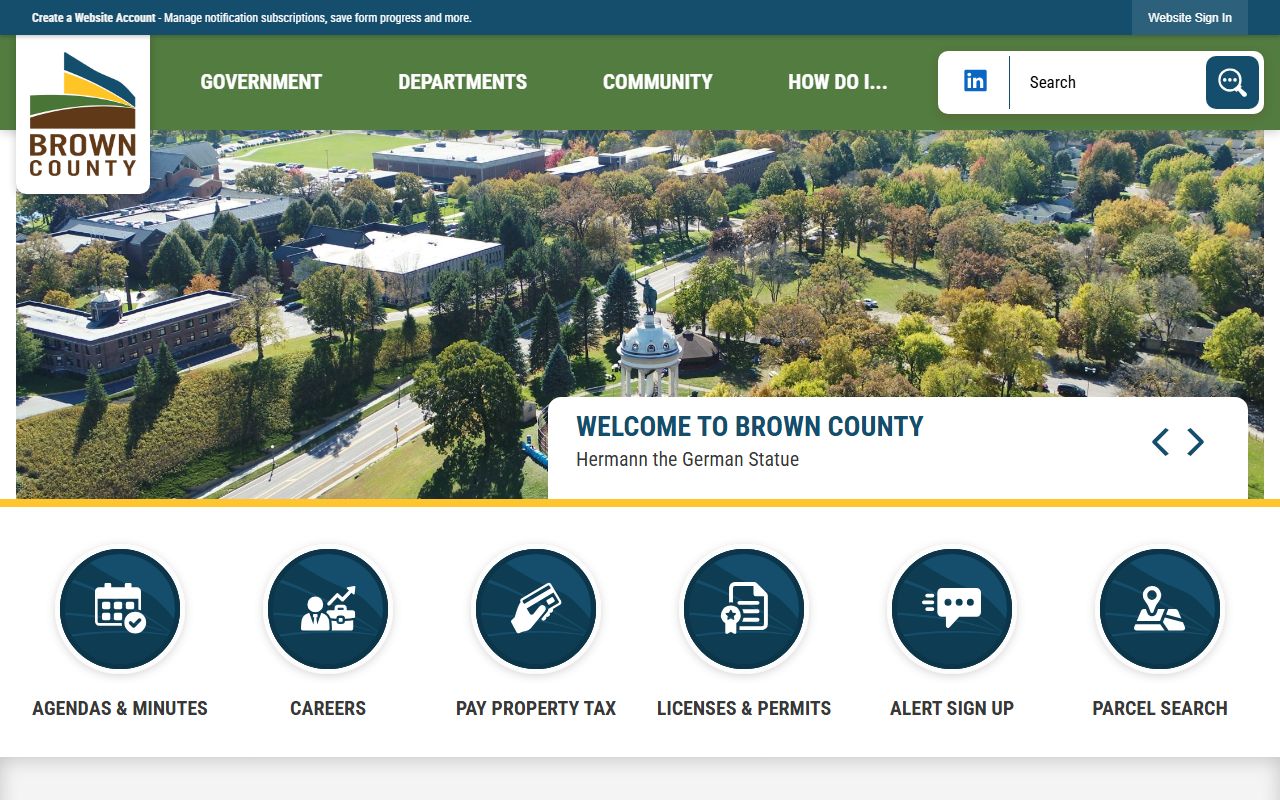
The county site is updated regularly and includes direct links to departments like the Assessor, Recorder, and Sheriff, making it easy to find the right contact for your records request.
Cities in Brown County
Brown County is a rural county in south-central Minnesota. The county seat, New Ulm, is the largest city in the county but does not meet the 100,000-population threshold for a dedicated city page on this site. Other communities in Brown County include Sleepy Eye, Springfield, Hanska, and Comfrey. None of these cities have dedicated public records pages here.
Nearby Counties
Brown County borders several other Minnesota counties, each with their own court and records offices.